
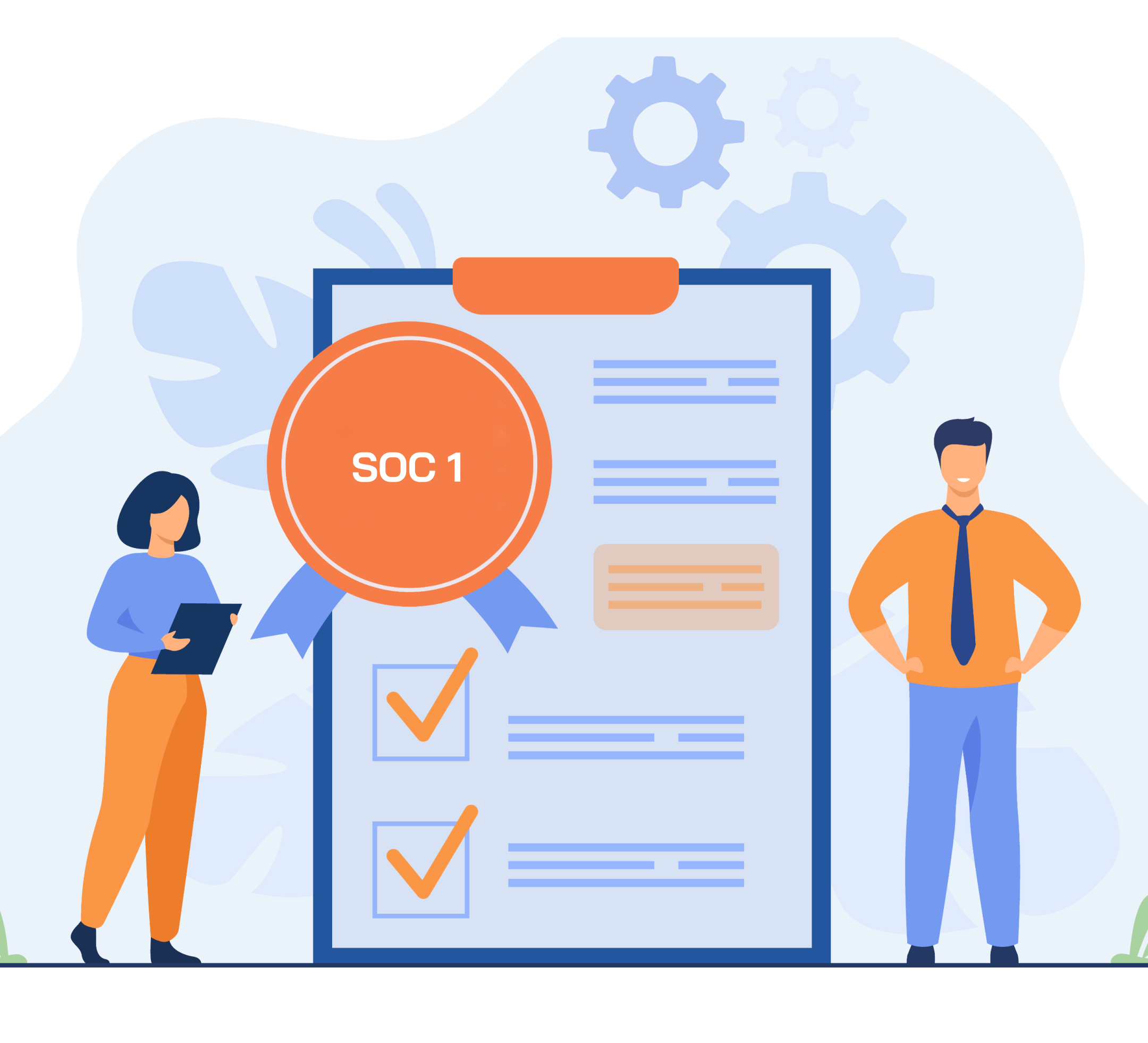
SOC 1
Service Organization Control (SOC) Report Type 1
SQNet Assessments, as an independent assurance and assessment body, provides impartial SOC 1 Type 1 reporting services, helping service organizations demonstrate transparency, control maturity, and reliability to clients, auditors, and stakeholders.
SOC 1 – Service Organization Control (SOC) Report Type 1
Organizations increasingly rely on third-party service providers to support critical business processes, particularly those impacting financial reporting. In such environments, assurance over internal controls becomes essential. SOC 1 – Service Organization Control Report Type 1 provides independent assurance regarding the design of controls at a service organization that are relevant to user entities’ internal control over financial reporting (ICFR).
Understanding SOC 1 Reports
SOC 1 reports are developed in accordance with the AICPA’s SSAE standards and are intended for use by user entities and their auditors. These reports focus specifically on controls at a service organization that may impact the financial statements of its customers.
SOC 1 reports are commonly requested from service providers such as payroll processors, accounting service providers, loan servicing companies, data processing firms, and other organizations involved in financial transaction processing.
What is SOC 1 Type 1?
A SOC 1 Type 1 report provides an assessment of:
The fair presentation of management’s description of the service organization’s system, and
The suitability of the design of controls relevant to financial reporting,
as of a specific point in time.
Unlike a Type 2 report, SOC 1 Type 1 does not assess operating effectiveness over a period. Instead, it confirms that controls are appropriately designed to achieve control objectives at the specified date.
Apply for Certification
Connect with Our Certification Experts
Purpose of SOC 1 Type 1 Reporting
The primary purpose of a SOC 1 Type 1 report is to provide assurance that a service organization has designed appropriate controls to manage risks affecting customers’ financial reporting. This report supports:
Financial statement audits of user entities
Regulatory and compliance requirements
Vendor risk management and due diligence
Stakeholder confidence in service delivery controls
SOC 1 Type 1 reports are particularly useful for organizations that are implementing new control frameworks or preparing for a future SOC 1 Type 2 examination.
Scope of SOC 1 Type 1 Examination
The scope of a SOC 1 Type 1 engagement is defined collaboratively between the service organization and SQNet Assessments. It typically includes:
Description of the service organization’s system
Control objectives related to financial reporting
Policies, procedures, and control activities
Complementary user entity controls (where applicable)
Clear scope definition ensures that the report is relevant, meaningful, and aligned with stakeholder expectations.
SOC 1 Type 1 Reporting Process
The SOC 1 Type 1 reporting process conducted by SQNet Assessments follows recognized assurance principles and emphasizes independence, objectivity, and confidentiality.
Planning & Scope Definition
The engagement begins with defining the system boundaries, services covered, control objectives, and reporting date. Understanding the service organization’s processes and financial reporting impact is critical at this stage.
Assessment of Control Design
SQNet Assessments evaluates whether controls are suitably designed to achieve stated control objectives. This includes review of documentation, walkthroughs of processes, and discussions with responsible personnel.
Report Preparation
Based on the assessment, SQNet Assessments issues a SOC 1 Type 1 report that includes:
Management’s system description
Management’s assertion
Independent assurance opinion
Description of control objectives and controls
Key Differences Between SOC 1 Type 1 and Type 2
SOC 1 Type 1: Evaluates design of controls at a specific point in time
SOC 1 Type 2: Evaluates both design and operating effectiveness over a defined period
Organizations often begin with a Type 1 report before progressing to Type 2 once controls have matured.
Key Benefits of SOC 1 Type 1
- Independent assurance over control design
- Improved transparency for customers and auditors
- Reduced audit burden for user entities
- Strengthened governance and control documentation
- Enhanced credibility in regulated and financial environments
Key Changes in SOC 1 Type 1
- Alignment with the latest ISO management system structure
- Simplified and modernized Annex A controls
- Better integration with risk management and business objectives
- Enhanced focus on cloud security, threat intelligence, and data protection
Frequently Asked Questions
Certification is an independent verification process that confirms an organization’s management system, product, or service complies with applicable international standards. It enhances credibility, builds customer trust, and demonstrates commitment to quality, safety, and compliance.
Certification is applicable to organizations of all sizes and sectors, including manufacturing, service, IT, healthcare, construction, education, and public sector organizations, subject to the applicable standard and scope.
SQNet Assessments provides certification services for various international management system standards, including quality, environmental, occupational health & safety, information security, business continuity, and other applicable ISO and sector-specific standards.
The certification timeline depends on the organization’s size, scope, complexity, and readiness level. Typically, the process may take a few weeks to a few months from application to certificate issuance.
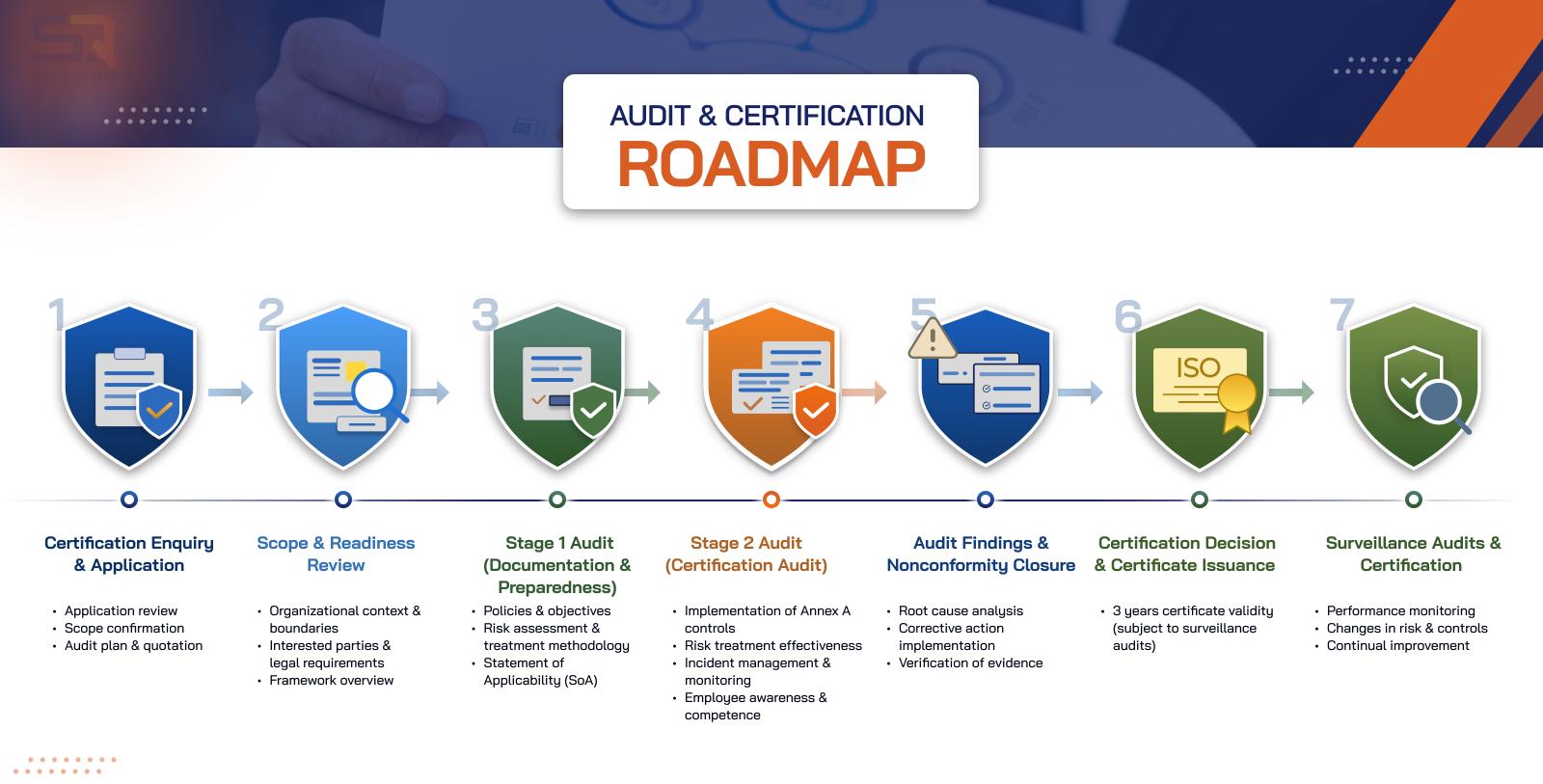
Most management system certifications are valid for three years, subject to successful completion of annual surveillance audits.
Stage 1 audit reviews documentation and readiness for certification.
Stage 2 audit evaluates effective implementation of the management system.
You can apply through the SQNet Assessments website or contact the team directly.