
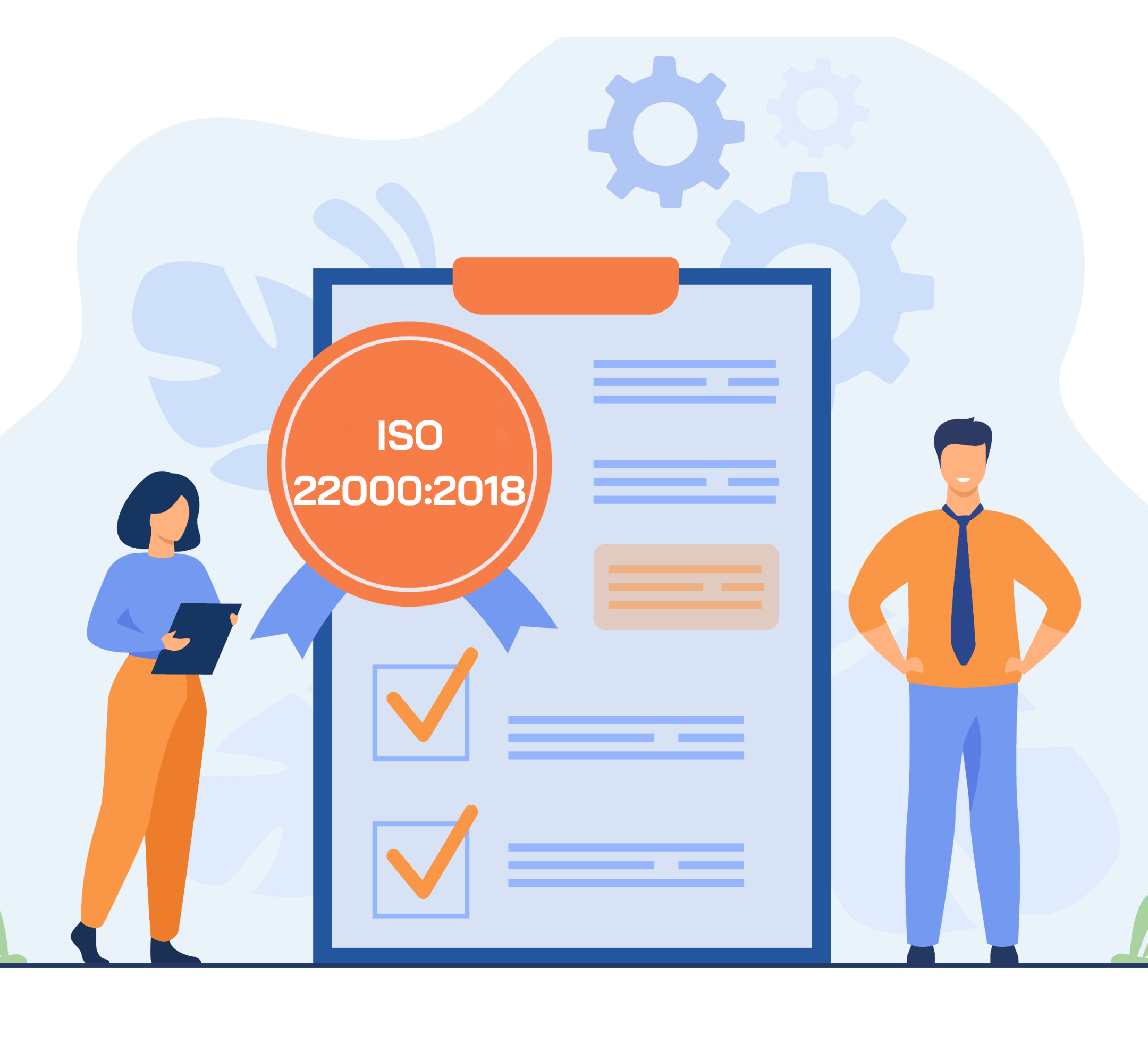
ISO 22000:2018
Food Safety Management Systems (FSMS)
SQNet Assessments, as an independent certification body, provides impartial ISO 22000:2018 audit and certification services, enabling organizations to demonstrate their commitment to food safety, regulatory compliance, and continual improvement.
Understanding ISO 22000:2018
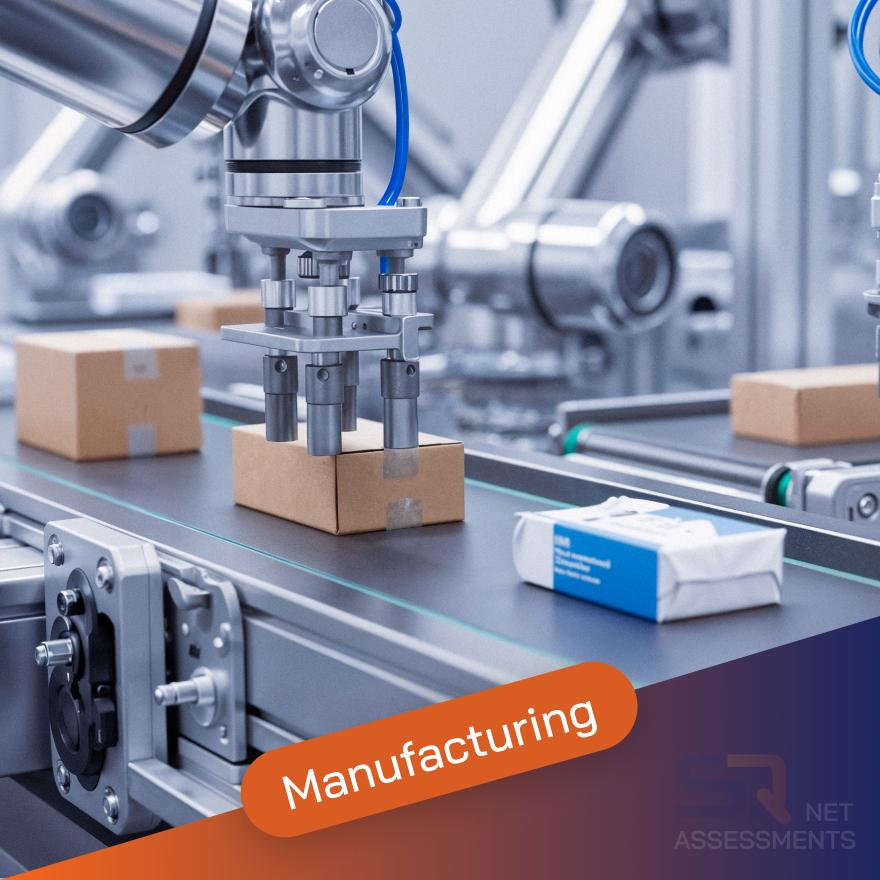
ISO 22000:2018 applies to all organizations in the food chain, regardless of size or complexity. This includes food manufacturers, processors, packers, transporters, storage providers, retailers, catering services, feed producers, packaging manufacturers, and service providers supporting food operations.
The standard integrates key food safety principles, including Hazard Analysis and Critical Control Points (HACCP), prerequisite programs (PRPs), and risk-based thinking, within a structured management system framework aligned with other ISO standards.
Purpose of ISO 22000 Certification
Certification to ISO 22000:2018 demonstrates that an organization has implemented an effective FSMS capable of identifying, preventing, and controlling food safety hazards. It provides independent assurance that food products are produced, handled, and delivered safely throughout the supply chain.
ISO 22000 certification enhances customer confidence, supports regulatory and contractual requirements, and helps organizations manage food safety risks proactively.
Key Elements of a Food Safety Management System
ISO 22000:2018 requires organizations to establish a comprehensive FSMS that includes the following key elements:
Food safety policy and objectives
Understanding of organizational context and interested parties
Hazard analysis and determination of control measures
Prerequisite programs (PRPs) and operational PRPs
Critical Control Points (CCPs), where applicable
Traceability and emergency preparedness
Control of nonconforming products
Apply for Certification
Connect with Our Certification Experts
ISO 22000 Certification Process
The ISO 22000 certification process conducted by SQNet Assessments follows internationally accepted certification practices to ensure impartial and objective evaluation.
Application & Scope Definition
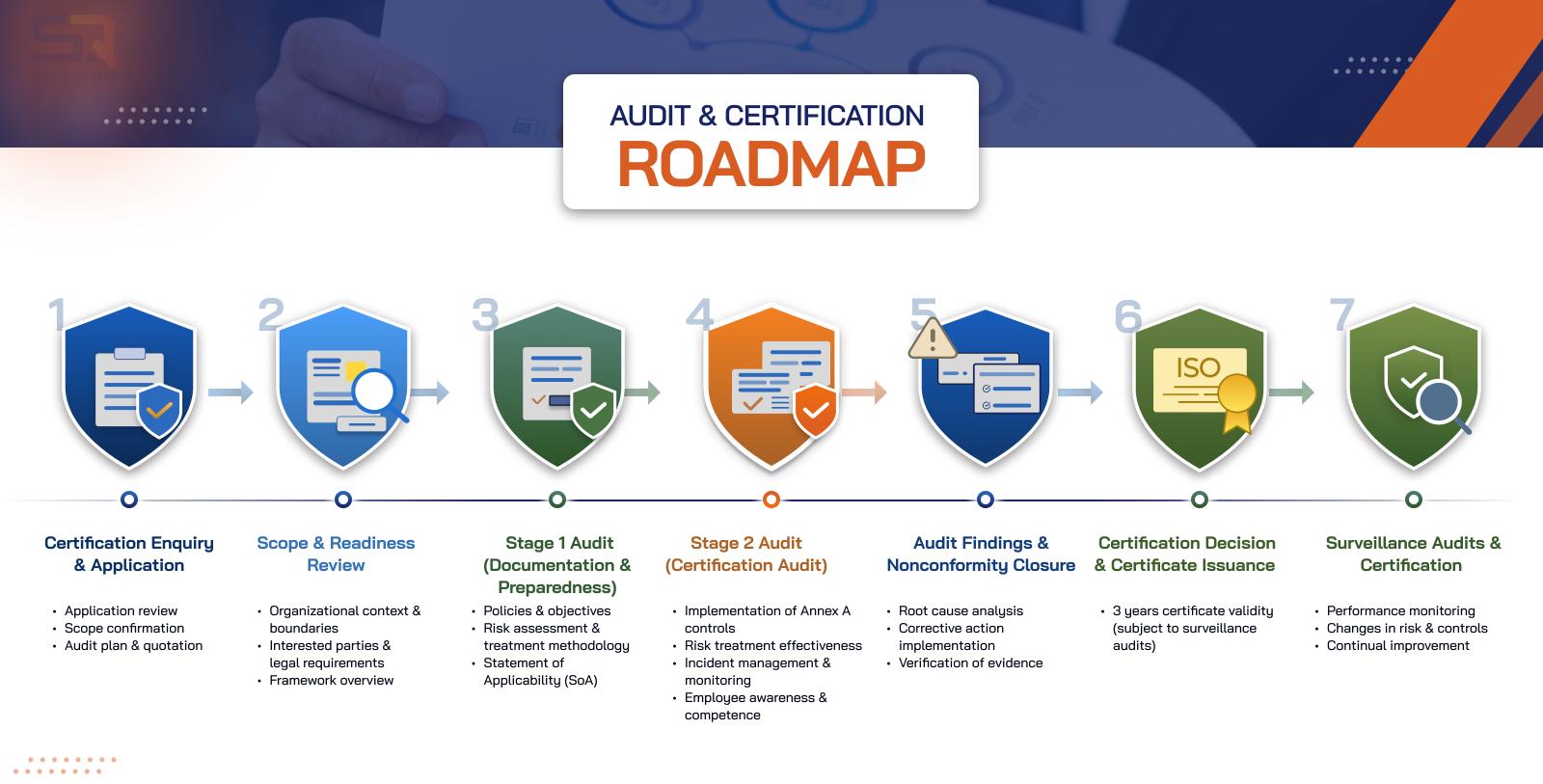
The certification process begins with an application, during which the scope of the FSMS is defined. This includes identifying products, processes, locations, and food chain activities covered under certification.
Audit & Evaluation
Certification audits are conducted in two stages:
Stage 1 Audit – Reviews FSMS documentation, hazard analysis, PRPs, and organizational readiness for certification
Stage 2 Audit – Evaluates effective implementation of food safety controls, monitoring activities, hygiene practices, and operational controls
Audits assess compliance with ISO 22000 requirements, regulatory obligations, and effective implementation of food safety controls.
Certification Decision
After successful audit completion and closure of any identified nonconformities, SQNet Assessments conducts an independent certification decision review before issuing the ISO 22000:2018 certificate.
Certification Validity & Surveillance Audits
ISO 22000:2018 certification is valid for three years, subject to annual surveillance audits. Surveillance audits ensure continued compliance, effectiveness of the FSMS, and continual improvement in food safety performance.

Integration with Other Management Systems
ISO 22000:2018 is aligned with the ISO High-Level Structure, allowing easy integration with other management system standards, such as:
ISO 9001 – Quality Management Systems
ISO 14001 – Environmental Management Systems
ISO 45001 – Occupational Health & Safety
ISO 22000-based schemes and sector-specific programs
Integrated management systems help organizations streamline audits, reduce duplication, and improve overall governance.
Commitment to Impartial Certification
SQNet Assessments is committed to delivering transparent, impartial, and credible ISO 22000:2018 certification services. Our structured audit methodology, competent auditors, and adherence to international certification principles ensure confidence in certification outcomes.
Ensuring Food Safety Across the Supply Chain
ISO 22000:2018 certification demonstrates an organization’s ability to manage food safety risks effectively and deliver safe food products consistently. With SQNet Assessments as a trusted certification partner, organizations can strengthen food safety management, meet stakeholder expectations, and support long-term business sustainability.

Commitment to Impartiality and Excellence
SQNet Assessments is committed to delivering transparent, impartial, and high-quality ISO/IEC 27001:2022 certification services. Our structured audit approach, qualified auditors, and adherence to international accreditation requirements ensure credible certification outcomes that support long-term information security excellence.
Key Benefits of ISO 22000
- Enhanced food safety and hazard control
- Improved compliance with food safety regulations
- Increased customer and consumer confidence
- Reduced risk of food contamination and recalls
- Improved traceability and emergency response
- Stronger food safety culture within the organization
Key Changes in ISO 22000
- Alignment with the latest ISO management system structure
- Simplified and modernized Annex A controls
- Better integration with risk management and business objectives
- Enhanced focus on cloud security, threat intelligence, and data protection
Frequently Asked Questions
Certification is an independent verification process that confirms an organization’s management system, product, or service complies with applicable international standards. It enhances credibility, builds customer trust, and demonstrates commitment to quality, safety, and compliance.
Certification is applicable to organizations of all sizes and sectors, including manufacturing, service, IT, healthcare, construction, education, and public sector organizations, subject to the applicable standard and scope.
SQNet Assessments provides certification services for various international management system standards, including quality, environmental, occupational health & safety, information security, business continuity, and other applicable ISO and sector-specific standards.
The certification timeline depends on the organization’s size, scope, complexity, and readiness level. Typically, the process may take a few weeks to a few months from application to certificate issuance.
Most management system certifications are valid for three years, subject to successful completion of annual surveillance audits.
Stage 1 audit reviews documentation and readiness for certification.
Stage 2 audit evaluates effective implementation of the management system.
You can apply through the SQNet Assessments website or contact the team directly.