
ISO 21001:2018
Educational Organizations Management Systems (EOMS)
SQNet Assessments, as an independent certification body, provides impartial ISO 21001:2018 audit and certification services, enabling educational organizations to demonstrate commitment to quality education, learner satisfaction, and continual improvement.
ISO 21001:2018 – Educational Organizations Management Systems (EOMS)
Educational organizations play a vital role in shaping knowledge, skills, and competencies across society. Ensuring quality, consistency, and effectiveness in educational services is essential for meeting the expectations of learners, educators, regulators, and other interested parties. ISO 21001:2018 is the internationally recognized standard that specifies requirements for establishing, implementing, maintaining, and continually improving an Educational Organizations Management System (EOMS).
Understanding ISO 21001:2018
ISO 21001:2018 is specifically designed for organizations that provide educational products and services, including schools, colleges, universities, training institutions, coaching centers, e-learning providers, and vocational education organizations. The standard focuses on enhancing the effectiveness of educational processes and ensuring that learner needs and expectations are consistently met.
Aligned with the ISO High-Level Structure, ISO 21001 facilitates integration with other management system standards and promotes a learner-centered approach to education management.
Purpose of ISO 21001 Certification
Certification to ISO 21001:2018 demonstrates that an educational organization has established a structured management system to improve educational quality, accessibility, and outcomes. It provides independent assurance that educational services are planned, delivered, monitored, and improved in a consistent and transparent manner.
ISO 21001 certification helps organizations enhance credibility, improve learner satisfaction, and support regulatory and accreditation requirements.
Apply for Certification
Connect with Our Certification Experts
Key Principles of Educational Organization Management
ISO 21001:2018 is based on key principles that guide effective management of educational organizations:
Learner and Beneficiary Focus – Understanding and meeting the needs of learners and other beneficiaries
Visionary Leadership – Establishing clear objectives and direction for education services
Engagement of People – Involving educators, staff, and stakeholders
Process Approach – Managing educational activities as interrelated processes
Improvement – Continual enhancement of educational effectiveness
Evidence-Based Decisions – Using data to evaluate performance and outcomes
Key Elements of an Educational Organizations Management System
ISO 21001:2018 requires organizations to establish and maintain an EOMS that includes:
Educational policy and objectives
Understanding organizational context and learner needs
Design and development of educational programs
Delivery of educational services
Evaluation of learning outcomes and learner satisfaction
Competence and development of educators and staff
ISO 21001 Certification Process
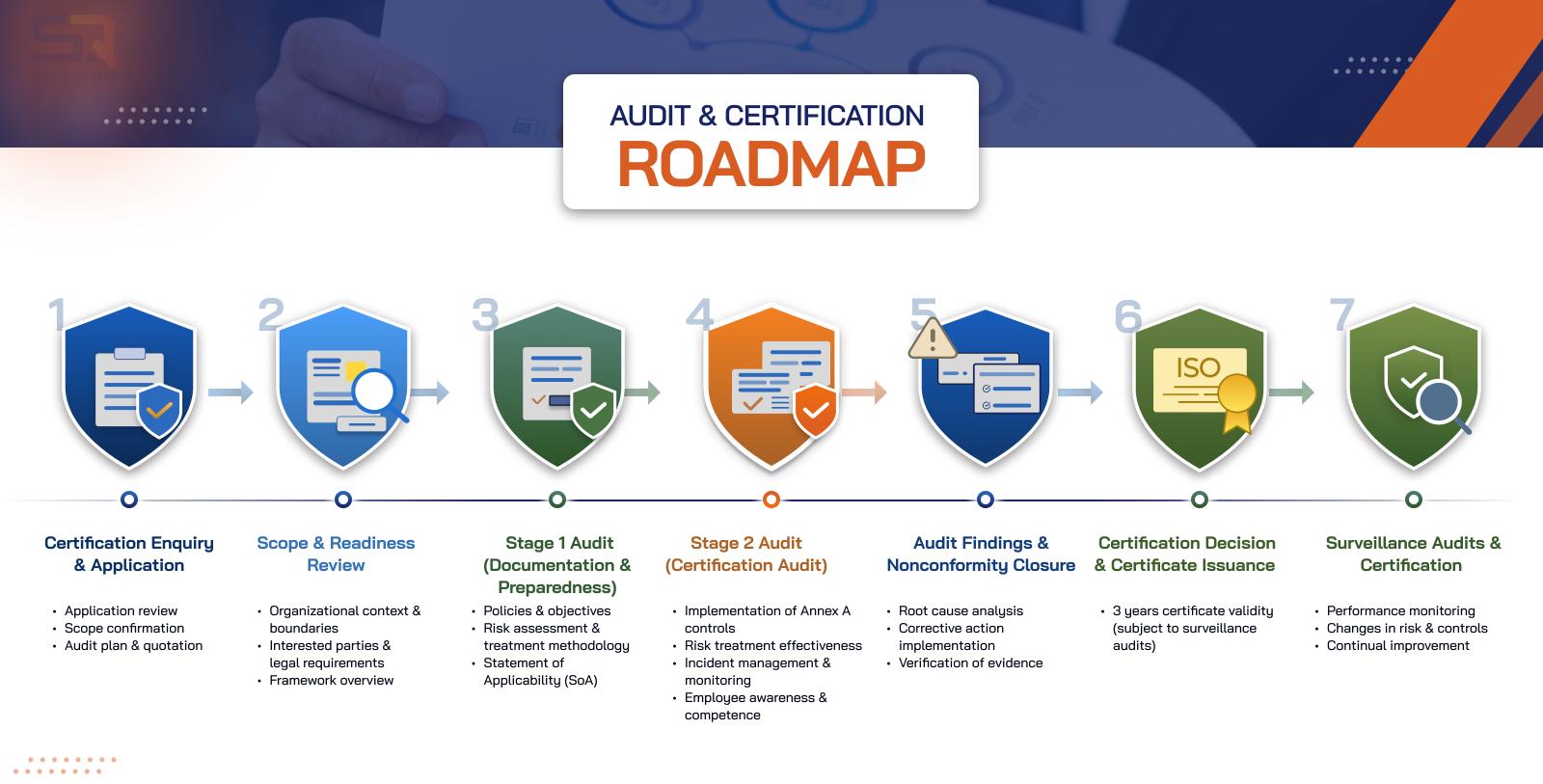
The ISO 21001 certification process conducted by SQNet Assessments follows internationally accepted certification practices to ensure impartial and objective evaluation.
Application & Scope Definition
The certification process begins with an application, during which the scope of the EOMS is defined. This includes identification of educational programs, services, locations, and delivery modes (classroom, online, blended).
Audit & Evaluation
Certification audits are conducted in two stages:
Stage 1 Audit – Reviews EOMS documentation, educational policies, and readiness for certification
Stage 2 Audit – Evaluates effective implementation of educational processes, learner engagement, and performance monitoring
Audits assess compliance with ISO 21001 requirements, effectiveness of educational delivery, and learner-focused practices.

Certification Validity & Surveillance Audits
ISO 21001:2018 certification is valid for three years, subject to annual surveillance audits. Surveillance audits ensure continued conformity, effectiveness of the EOMS, and continual improvement in educational performance.
Key Benefits of ISO 21001
- Enhanced quality and consistency of educational services
- Improved learner satisfaction and engagement
- Increased credibility and stakeholder confidence
- Support for regulatory and accreditation requirements
- Improved educational governance and accountability
Key Changes in ISO 21001
- Alignment with the latest ISO management system structure
- Simplified and modernized Annex A controls
- Better integration with risk management and business objectives
- Enhanced focus on cloud security, threat intelligence, and data protection
Frequently Asked Questions
Certification is an independent verification process that confirms an organization’s management system, product, or service complies with applicable international standards. It enhances credibility, builds customer trust, and demonstrates commitment to quality, safety, and compliance.
Certification is applicable to organizations of all sizes and sectors, including manufacturing, service, IT, healthcare, construction, education, and public sector organizations, subject to the applicable standard and scope.
SQNet Assessments provides certification services for various international management system standards, including quality, environmental, occupational health & safety, information security, business continuity, and other applicable ISO and sector-specific standards.
The certification timeline depends on the organization’s size, scope, complexity, and readiness level. Typically, the process may take a few weeks to a few months from application to certificate issuance.
Most management system certifications are valid for three years, subject to successful completion of annual surveillance audits.
Stage 1 audit reviews documentation and readiness for certification.
Stage 2 audit evaluates effective implementation of the management system.
You can apply through the SQNet Assessments website or contact the team directly.