
HIPAA
The Health Insurance Portability and Accountability Act
SQNet Assessments, as an independent conformity assessment and assurance body, supports organizations in evaluating and demonstrating compliance with HIPAA requirements through structured assessments and independent evaluations.
HIPAA The Health Insurance Portability and Accountability Act
The Health Insurance Portability and Accountability Act (HIPAA) is a United States federal law designed to protect the privacy, security, and integrity of sensitive health information. HIPAA establishes national standards for safeguarding Protected Health Information (PHI) and ensures that healthcare organizations and their business partners implement appropriate controls to prevent unauthorized access, use, or disclosure of patient data.
Understanding HIPAA
HIPAA applies to covered entities, such as healthcare providers, health plans, and healthcare clearinghouses, as well as business associates that handle PHI on behalf of covered entities. The law governs how PHI is created, received, maintained, transmitted, and protected in both electronic and physical forms.
HIPAA compliance is essential for organizations involved in healthcare services, health information technology, medical billing, claims processing, cloud hosting for healthcare data, and other related services.
Key HIPAA Rules
HIPAA compliance is built around several core rules that define privacy and security obligations:
HIPAA Privacy Rule
The Privacy Rule establishes standards for the use and disclosure of PHI. It grants individuals rights over their health information, including access, amendment, and accounting of disclosures, while limiting the use of PHI to permitted purposes.
Apply for Certification
Connect with Our Certification Experts
HIPAA Security Rule
The Security Rule focuses on protecting electronic PHI (ePHI) through administrative, physical, and technical safeguards. Organizations must implement controls to ensure confidentiality, integrity, and availability of ePHI.
HIPAA Breach Notification Rule
This rule requires organizations to notify affected individuals, regulators, and, in certain cases, the media when a breach of unsecured PHI occurs.

HIPAA Enforcement Rule
The Enforcement Rule outlines compliance monitoring, investigations, penalties, and corrective actions related to HIPAA violations.
Purpose of HIPAA Compliance
The primary purpose of HIPAA is to protect patient privacy while ensuring the secure flow of health information necessary for quality healthcare delivery. Compliance demonstrates that an organization has implemented appropriate safeguards to manage risks related to PHI and supports regulatory and contractual obligations.
HIPAA compliance also enhances patient trust and reduces the risk of data breaches, reputational damage, and regulatory penalties.

HIPAA Compliance Requirements
Organizations subject to HIPAA must implement comprehensive safeguards, including:
Policies and procedures for PHI handling
Risk assessments and risk management processes
Access controls and authentication mechanisms
Encryption and transmission security
Workforce training and awareness
Incident response and breach notification procedures
Vendor and business associate management
Ongoing monitoring and compliance evaluation
These measures help ensure PHI is protected throughout its lifecycle.

HIPAA Assessment and Assurance Process
The HIPAA assessment process supported by SQNet Assessments focuses on evaluating an organization’s alignment with HIPAA requirements.
Scope Definition
The assessment begins by identifying systems, processes, locations, and third parties involved in PHI handling. Clear scope definition ensures an accurate and meaningful evaluation.

Evaluation and Review
Assessments review policies, procedures, technical controls, and operational practices related to HIPAA compliance. This includes evaluating safeguards, access controls, training programs, and incident management processes.
Findings and Reporting
Assessment results are documented and communicated through structured reports, enabling organizations to understand compliance status and areas requiring improvement.

Relationship with International Standards
HIPAA compliance can be supported by alignment with internationally recognized standards, such as:
ISO/IEC 27001 – Information Security Management Systems
ISO/IEC 27701 – Privacy Information Management
ISO/IEC 27018 – Protection of Personal Data in the Cloud
Integration of these standards helps organizations establish consistent and auditable privacy and security frameworks.

Key Benefits of HIPAA Compliance
- Independent evaluation of HIPAA compliance
- Improved protection of patient health information
- Enhanced trust among patients and healthcare partners
- Reduced risk of data breaches and regulatory penalties
- Structured approach to healthcare data security
Key Changes in HIPAA Compliance
- Alignment with the latest ISO management system structure
- Simplified and modernized Annex A controls
- Better integration with risk management and business objectives
- Enhanced focus on cloud security, threat intelligence, and data protection
Frequently Asked Questions
Certification is an independent verification process that confirms an organization’s management system, product, or service complies with applicable international standards. It enhances credibility, builds customer trust, and demonstrates commitment to quality, safety, and compliance.
Certification is applicable to organizations of all sizes and sectors, including manufacturing, service, IT, healthcare, construction, education, and public sector organizations, subject to the applicable standard and scope.
SQNet Assessments provides certification services for various international management system standards, including quality, environmental, occupational health & safety, information security, business continuity, and other applicable ISO and sector-specific standards.
The certification timeline depends on the organization’s size, scope, complexity, and readiness level. Typically, the process may take a few weeks to a few months from application to certificate issuance.
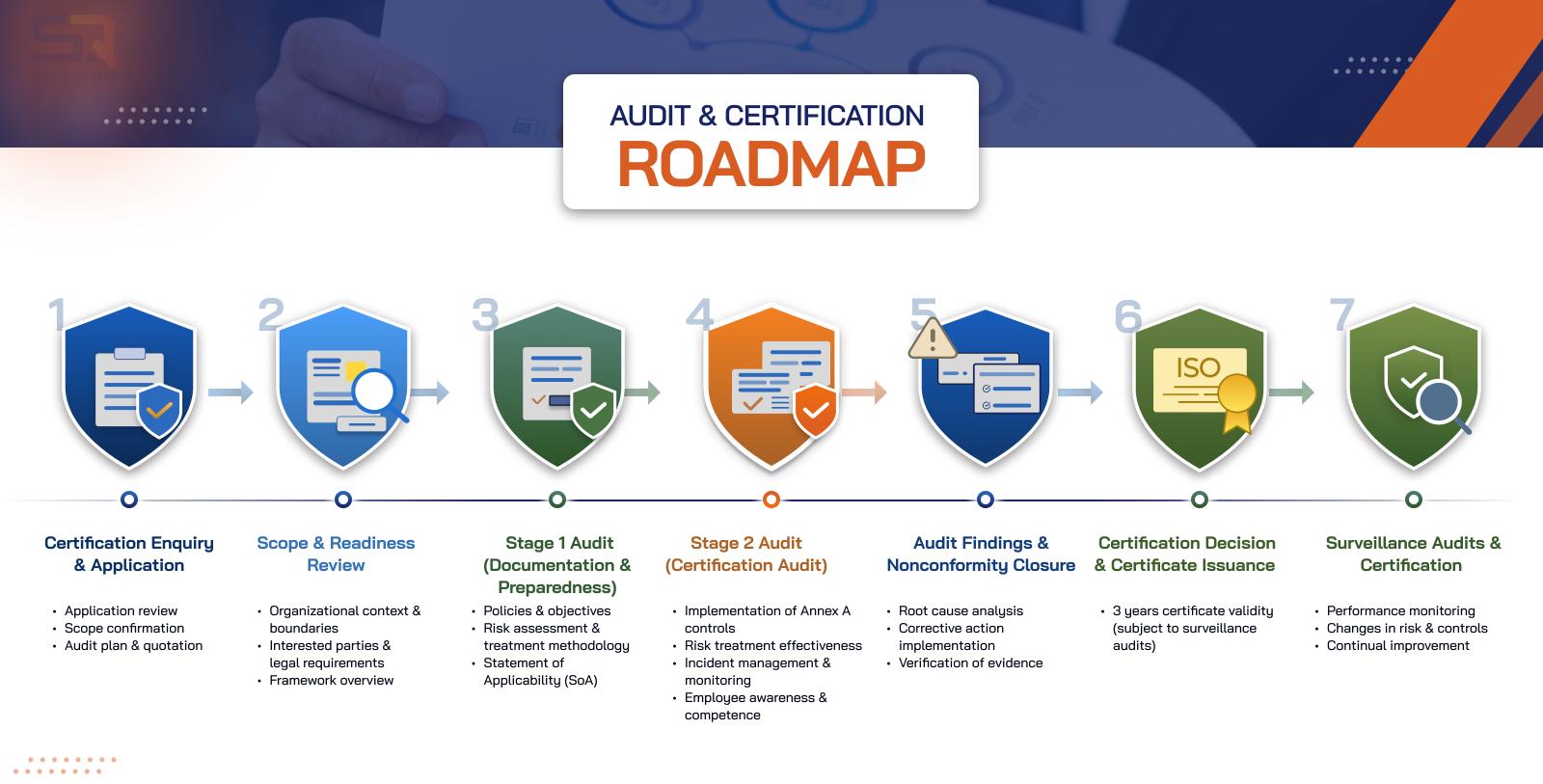
Most management system certifications are valid for three years, subject to successful completion of annual surveillance audits.
Stage 1 audit reviews documentation and readiness for certification.
Stage 2 audit evaluates effective implementation of the management system.
You can apply through the SQNet Assessments website or contact the team directly.