
ISO/IEC 42001:2023
Artificial Intelligence Management Systems (AIMS)
SQNet Assessments, as an independent certification body, provides impartial ISO/IEC 42001:2023 audit and certification services, enabling organizations to demonstrate effective governance, risk management, and accountability in the use of AI technologies.
ISO/IEC 42001:2023 – Artificial Intelligence Management Systems (AIMS)
Artificial Intelligence (AI) is transforming how organizations design products, deliver services, and make decisions. As AI adoption increases, organizations must ensure that AI systems are developed, deployed, and operated in a responsible, transparent, and controlled manner. ISO/IEC 42001:2023 is the world’s first international standard that specifies requirements for establishing, implementing, maintaining, and continually improving an Artificial Intelligence Management System (AIMS).
Understanding ISO/IEC 42001:2023
ISO/IEC 42001:2023 provides a structured framework for managing AI systems throughout their lifecycle, from design and development to deployment, operation, and decommissioning. The standard addresses key challenges associated with AI, including ethical considerations, risk management, transparency, explainability, data quality, and human oversight.
Purpose of ISO/IEC 42001 Certification
Certification to ISO/IEC 42001:2023 demonstrates that an organization has implemented a systematic approach to managing AI-related risks and opportunities. It confirms that AI systems are governed in a way that aligns with organizational objectives, legal and regulatory requirements, and societal expectations.
ISO/IEC 42001 certification supports responsible AI practices, builds stakeholder trust, and helps organizations manage risks related to bias, safety, security, and unintended consequences of AI systems.
Apply for Certification
Connect with Our Certification Experts
Key Elements of an AI Management System
ISO/IEC 42001:2023 emphasizes a risk-based and lifecycle-oriented approach to AI management. Key elements evaluated during certification include:
AI policy and governance structure
Roles and responsibilities for AI oversight
AI risk assessment and risk treatment processes
Data management and data quality controls
Design, development, and testing of AI systems
Transparency, explainability, and documentation
Human oversight and intervention mechanisms
Monitoring, performance evaluation, and incident handling
Continual improvement of AI management practices
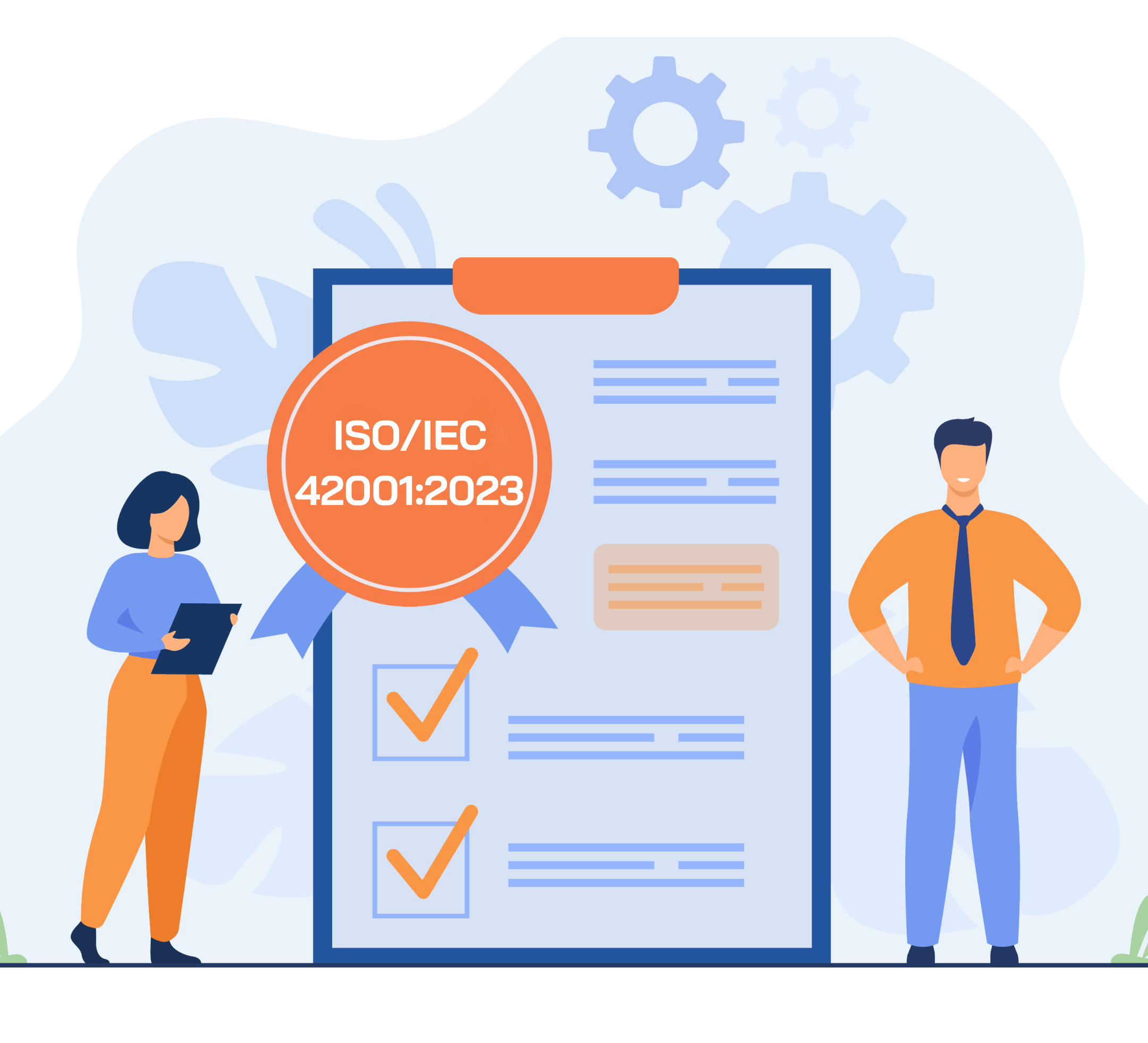
ISO/IEC 42001 Certification Process
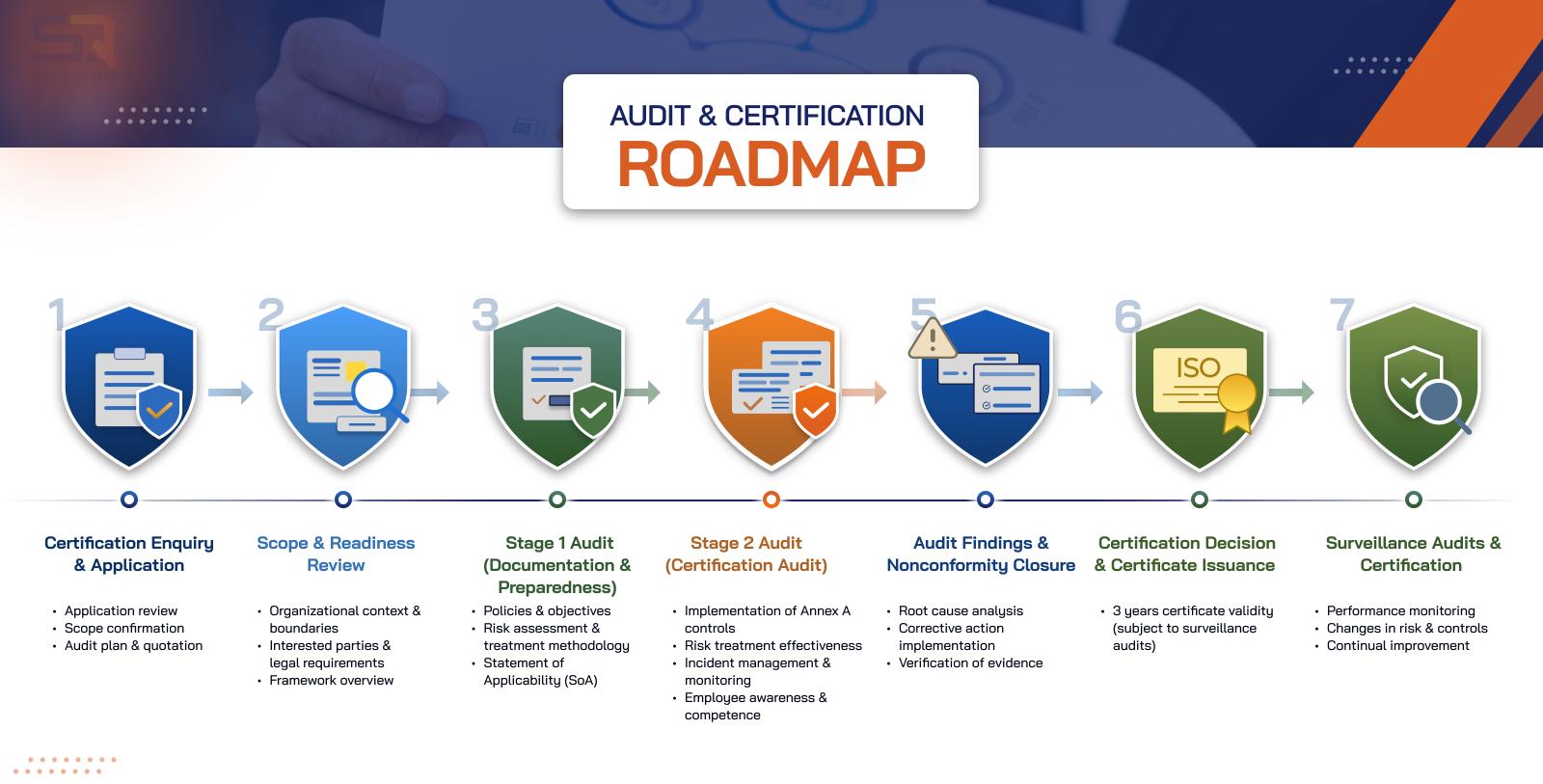
The ISO/IEC 42001 certification process conducted by SQNet Assessments follows internationally accepted management system certification principles to ensure impartial and objective evaluation.
Application & Scope Definition
The process begins with a certification application, during which the scope of the AI Management System is defined. This includes identifying AI systems, use cases, organizational roles, and interfaces with suppliers and partners.
Audit & Evaluation
Certification audits assess conformity with ISO/IEC 42001:2023 requirements by evaluating both documented processes and their effective implementation. Auditors review AI governance frameworks, risk assessments, lifecycle controls, and operational practices.
Certification Decision
Following successful audit completion and closure of any identified nonconformities, SQNet Assessments conducts an independent certification decision review before issuing the ISO/IEC 42001:2023 certificate.
Certification Validity & Surveillance Audits
ISO/IEC 42001:2023 certification is valid for three years, subject to annual surveillance audits. Surveillance audits ensure the AI Management System remains effective, adapts to changes in AI technologies, and continues to address emerging risks and regulatory requirements.
Relationship with Other Management System Standards
ISO/IEC 42001:2023 can be integrated with other management system standards, such as:
ISO/IEC 27001 (Information Security Management)
ISO/IEC 27701 (Privacy Information Management)
ISO 22301 (Business Continuity Management)
ISO 9001 (Quality Management)
Integration supports consistent governance, risk management, and operational alignment across the organization.
Key Benefits of ISO/IEC 42001
- Demonstrates responsible and ethical AI governance
- Enhances transparency and accountability in AI use
- Reduces risks related to bias, safety, and compliance
- Builds trust among customers, regulators, and stakeholders
- Supports alignment with emerging AI regulations
Key Changes in ISO/IEC 42001
- Alignment with the latest ISO management system structure
- Simplified and modernized Annex A controls
- Better integration with risk management and business objectives
- Enhanced focus on cloud security, threat intelligence, and data protection
Frequently Asked Questions
Certification is an independent verification process that confirms an organization’s management system, product, or service complies with applicable international standards. It enhances credibility, builds customer trust, and demonstrates commitment to quality, safety, and compliance.
Certification is applicable to organizations of all sizes and sectors, including manufacturing, service, IT, healthcare, construction, education, and public sector organizations, subject to the applicable standard and scope.
SQNet Assessments provides certification services for various international management system standards, including quality, environmental, occupational health & safety, information security, business continuity, and other applicable ISO and sector-specific standards.
The certification timeline depends on the organization’s size, scope, complexity, and readiness level. Typically, the process may take a few weeks to a few months from application to certificate issuance.
Most management system certifications are valid for three years, subject to successful completion of annual surveillance audits.
Stage 1 audit reviews documentation and readiness for certification.
Stage 2 audit evaluates effective implementation of the management system.
You can apply through the SQNet Assessments website or contact the team directly.