
ISO/IEC 27001:2022
Information Security Management Systems
ISO/IEC 27001 is the international standard for Information Security Management Systems (ISMS) which puts out a security framework for the implementation, maintenance and continuous improvement of info security in an organization.
ISO/IEC 27001:2022 – Audit & Certification Process
In an increasingly digital and interconnected world, information security has become a critical business priority. ISO/IEC 27001:2022 is the internationally recognized standard for establishing, implementing, maintaining, and continually improving an Information Security Management System (ISMS). The standard provides a systematic framework for identifying information security risks and applying appropriate controls to protect information assets.
SQNet Assessments, as an independent certification body, offers impartial ISO/IEC 27001:2022 audit and certification services to organizations seeking to demonstrate effective information security governance, regulatory compliance, and stakeholder confidence.
Understanding ISO/IEC 27001:2022
ISO/IEC 27001:2022 specifies requirements for an ISMS based on a risk management approach. It enables organizations to protect information in all forms—digital, paper-based, and verbal—by ensuring confidentiality, integrity, and availability. The 2022 revision reflects evolving information security threats, cloud computing environments, and modern risk management practices, making the standard applicable across industries and organizational sizes.
Certification to ISO/IEC 27001:2022 demonstrates that an organization has implemented a structured and effective system to manage information security risks and comply with applicable legal, regulatory, and contractual requirements.
Role of the Certification Body
A certification body plays a critical role in independently evaluating an organization’s ISMS against ISO/IEC 27001:2022 requirements. SQNet Assessments conducts audits in accordance with internationally accepted auditing principles, ensuring impartiality, competence, confidentiality, and consistency throughout the certification cycle.
Certification audits are designed to assess both conformance to the standard and effectiveness of implementation, providing confidence to customers, partners, regulators, and other interested parties.
Apply for Certification
Connect with Our Certification Experts
Certification Application & Scope Definition
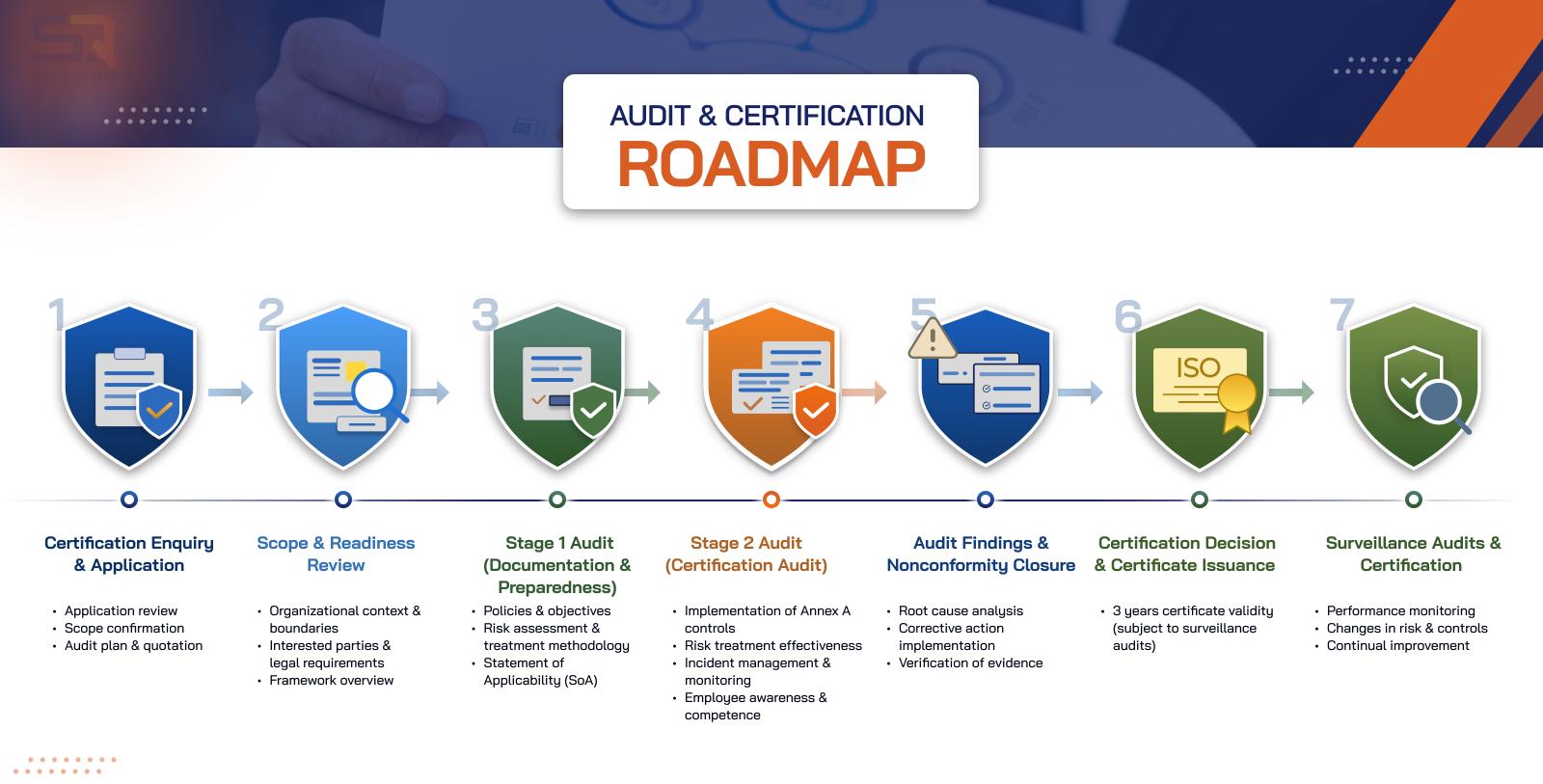
The ISO/IEC 27001 certification process begins with a formal application submitted to SQNet Assessments. During this stage, the organization defines the scope of certification, including business activities, information assets, physical and virtual locations, and supporting processes.
The certification body reviews the application to determine audit duration, audit methodology, and resource requirements. Clear scope definition is essential to ensure accurate audit planning and meaningful certification outcomes.
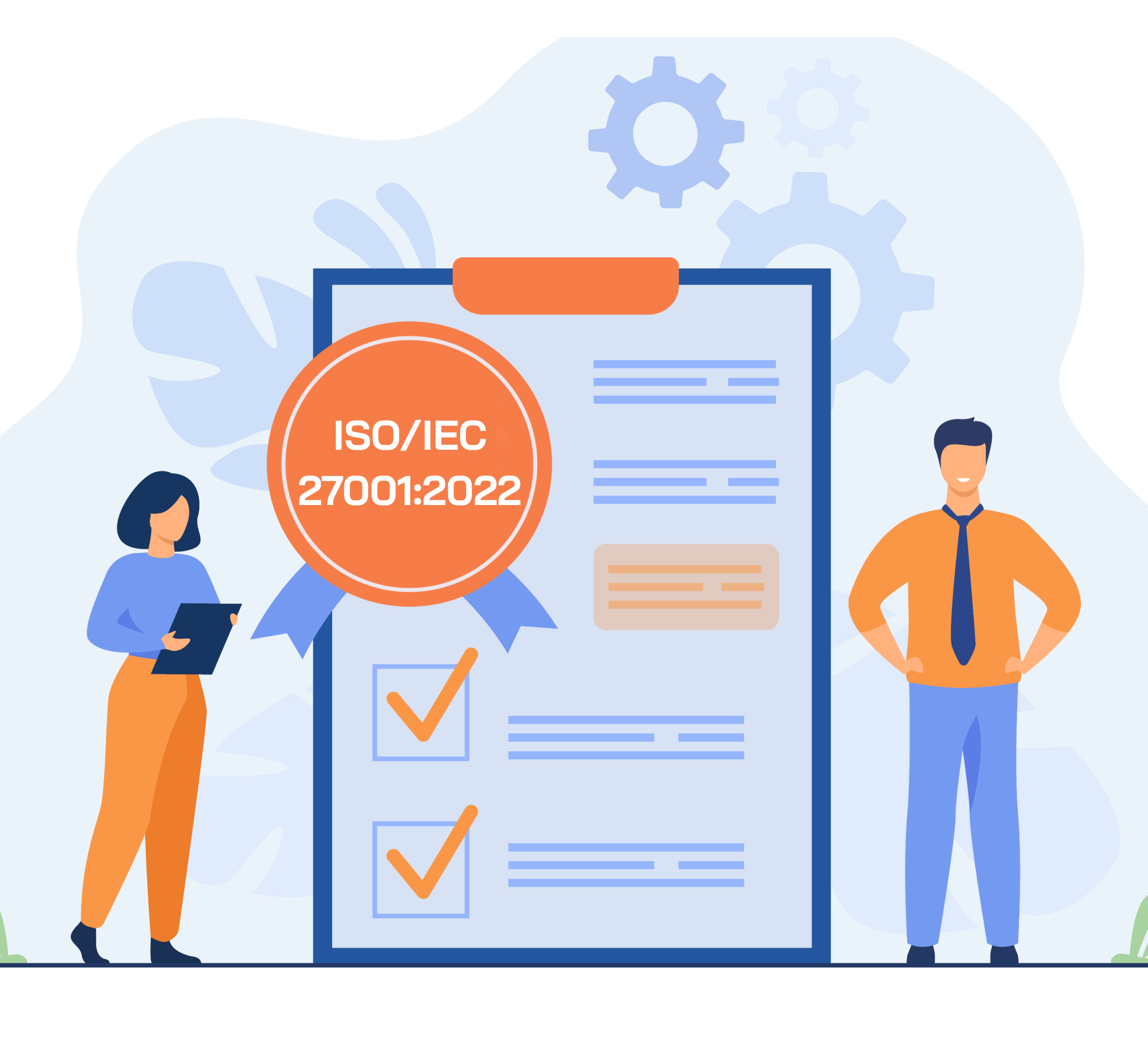
Stage 1 Audit – ISMS Documentation & Readiness Review
The Stage 1 audit focuses on evaluating the organization’s readiness for certification. This audit is primarily a documentation and preparedness review and may be conducted on-site or remotely, depending on organizational complexity.
Key areas assessed during the Stage 1 audit include:
ISMS scope and organizational context
Information security policy and objectives
Risk assessment and risk treatment methodology
Statement of Applicability (SoA)
Compliance with applicable legal and regulatory requirements
Internal audit and management review planning
The Stage 1 audit identifies potential gaps and areas requiring improvement before proceeding to the certification audit. Findings from this stage help organizations prepare effectively for Stage 2.
Stage 2 Audit – Certification Audit
The Stage 2 audit is the main certification audit and focuses on evaluating the effective implementation and operational performance of the ISMS. This audit is conducted at relevant sites and involves interviews, observations, and review of records.
During the Stage 2 audit, SQNet Assessments evaluates:
Implementation of Annex A controls based on risk treatment decisions
Effectiveness of information security controls
Incident management and response mechanisms
Access control, asset management, and monitoring processes
Competence and awareness of personnel
Internal audits and management reviews
Audit findings are classified as major or minor nonconformities, observations, or opportunities for improvement, based on their impact on ISMS effectiveness.
Nonconformity Management & Corrective Actions
When nonconformities are identified, organizations are required to perform root cause analysis and implement corrective actions within defined timelines. Objective evidence is submitted to SQNet Assessments for review and verification.
The certification body evaluates whether corrective actions effectively address identified issues and prevent recurrence. Successful closure of all nonconformities is mandatory before certification can be granted.

Certification Decision & Certificate Issuance
Once all audit findings are resolved, SQNet Assessments conducts an independent certification decision review to ensure audit impartiality and compliance with certification requirements. Upon approval, the ISO/IEC 27001:2022 certificate is issued.
The certificate is valid for three years, subject to successful completion of surveillance audits.

Surveillance Audits & Certification Maintenance
To ensure ongoing conformity and continual improvement, surveillance audits are conducted annually during the certification cycle. Surveillance audits assess:
Continued effectiveness of the ISMS
Changes in organizational context, risks, and controls
Compliance with ISO/IEC 27001:2022 requirements
Progress in continual improvement initiatives
Surveillance audits help organizations maintain certification integrity and adapt their ISMS to evolving information security risks.
Commitment to Impartiality and Excellence
SQNet Assessments is committed to delivering transparent, impartial, and high-quality ISO/IEC 27001:2022 certification services. Our structured audit approach, qualified auditors, and adherence to international accreditation requirements ensure credible certification outcomes that support long-term information security excellence.
Key Benefits of ISO/IEC 27001:2022
- Protects sensitive business and customer information
- Reduces risk of data breaches and cyber threats
- Enhances customer confidence and organizational credibility
- Supports compliance with legal, regulatory, and contractual requirements
- Improves internal security controls and risk management processes
- Strengthens business continuity and resilience
- Provides a competitive advantage in domestic and global markets
Key Changes in ISO/IEC 27001:2022
- Alignment with the latest ISO management system structure
- Simplified and modernized Annex A controls
- Better integration with risk management and business objectives
- Enhanced focus on cloud security, threat intelligence, and data protection
Frequently Asked Questions
Certification is an independent verification process that confirms an organization’s management system, product, or service complies with applicable international standards. It enhances credibility, builds customer trust, and demonstrates commitment to quality, safety, and compliance.
Certification is applicable to organizations of all sizes and sectors, including manufacturing, service, IT, healthcare, construction, education, and public sector organizations, subject to the applicable standard and scope.
SQNet Assessments provides certification services for various international management system standards, including quality, environmental, occupational health & safety, information security, business continuity, and other applicable ISO and sector-specific standards.
The certification timeline depends on the organization’s size, scope, complexity, and readiness level. Typically, the process may take a few weeks to a few months from application to certificate issuance.
Most management system certifications are valid for three years, subject to successful completion of annual surveillance audits.
Stage 1 audit reviews documentation and readiness for certification.
Stage 2 audit evaluates effective implementation of the management system.
You can apply through the SQNet Assessments website or contact the team directly.